

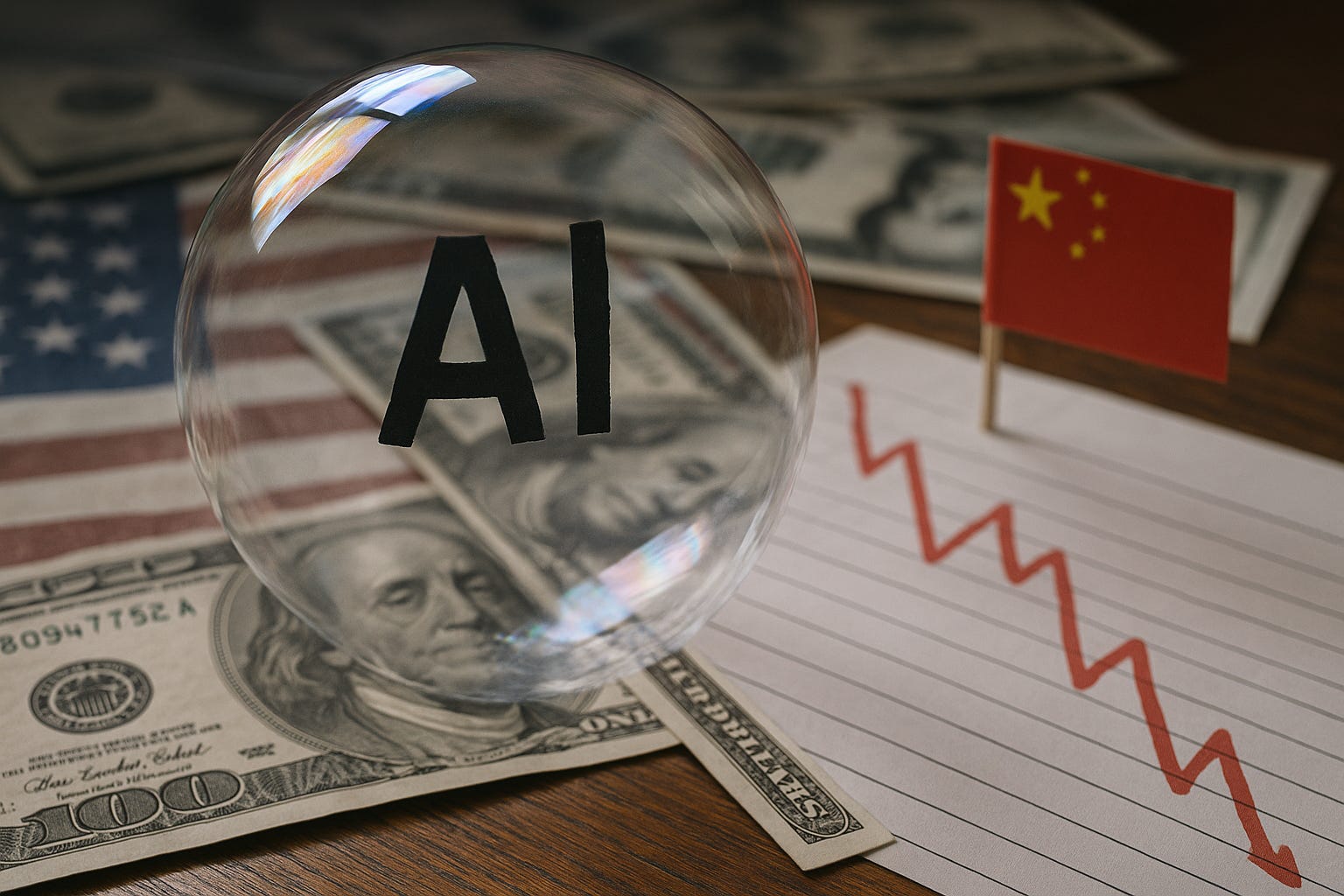
“A.I. May Just Be Kind of Ordinary”, “Meta freezes AI hiring”, “Say farewell to the AI bubble, and get ready for the crash”, “Is the A.I. Sell-Off the Start of Something Bigger?”. These are just four of many headlines that were published by American media outlets this week. The mood in Silicon Valley has shifted notably. What began as unbridled optimism about artificial intelligence's transformative potential has given way to more measured expectations, with companies reassessing ambitious projects and investors scrutinizing valuations more carefully. The reason for all of this? A new MIT report published August 18th has delivered particularly sobering news: 95% of generative AI pilots at companies are failing to deliver meaningful returns.
Meanwhile, in Beijing, Shanghai, and Shenzhen, a different narrative is unfolding. Analysis of recent Chinese industry reports and regulatory filings from June through mid-August reveal continued steady investment and a systematic push to embed artificial intelligence across sectors from biotechnology to entertainment, suggesting a longer-term view of the technology's potential.
This divergence raises important questions about different approaches to emerging technology investment and development timelines across the world's two largest economies.
